My background is in commercial real estate debt — first advising institutional borrowers and investors on interest rate risk, then moving to the principal side to manage a $2.5B levered debt portfolio, and now back to advisory while building software for the same market. I've sat on both sides of the table: the advisor helping borrowers structure hedging strategy, and the lender underwriting and managing the loans those hedges protect. Along the way I taught myself to build software and started competing in AI hackathons. The same frameworks I use for financial risk translate to product design and technical systems — and I think the tools institutional real estate runs on are overdue for a rebuild. I'm working toward that intersection on purpose, both inside my advisory work and outside it.
Interest rate caps used to be a rounding error in real estate deals. Then they became seven-figure decisions — and most borrowers' approach didn't change. They hedged because lenders required it, not because anyone was analyzing structure, strike, and term across their portfolio.
I spent nearly a decade at CIRM advising institutional clients across $20B+ in assets, helping borrowers treat hedging as a portfolio-level strategic decision rather than a deal-level compliance exercise. CIRM was founded in 1981 and has advised on more than $116B in debt over the past three years.
I left to join PCCP, where I managed a $2.5B levered real estate debt portfolio — the other side of the table. When the market turned, I re-underwrote collateral assets and structured loan modifications that secured $25M in cash equity on $230M in troubled loans. That work required understanding borrower financials and the rate environment simultaneously.
I'm back at CIRM now as Managing Director, focused on helping real estate investors and developers make better decisions about rate exposure — and building the analytics tooling I wished existed when I was managing a portfolio myself.
Floating-rate CRE debt funds are managing billions in loans where every rate reset, cap expiration, and hedge decision affects portfolio-level returns. Most manage this exposure loan by loan in spreadsheets. The tools haven't caught up to the complexity of the portfolios.
I'm building analytics and advisory capabilities specifically for institutional debt fund portfolio managers — portfolio-level rate exposure visibility, hedge optimization across a book of loans, and cash flow analysis that connects individual loan economics to fund-level IRR. The goal is to give PMs the same precision on the liability side that they already expect on the asset side.
This work draws on my experience at PCCP managing a levered debt portfolio, a decade of rate risk advisory at CIRM, and the software development skills I've built over the past two years.
I won 2nd place with my good friend Valerie Yong at the Rosewood Sand Hill Hospitality 2030 Hackathon, organized by Cerebral Valley. The event, sponsored by Rosewood, Anthropic, ElevenLabs, and Greycroft, focused on how luxury hotels can apply AI to improve and refine guest experience across a global portfolio.
Our core product principles were:
1. Don't tax the customer with forced data intake (paperwork) or web scraping; always solve for creating an effortless guest experience.
2. Luxury hospitality is a global business supported by international teams. In a highly personal, people-first setting, AI can remove language barriers to improve staff choreography, enabling each team member to deliver the highest-quality experience with every interaction.
A sweet full-circle moment: I entered and won my first hackathon a little less than a year ago, and have placed in six total since — each an accelerated step on the path to becoming technical, working alongside experienced engineers to ship my own ideas fast.
Most agentic-commerce demos run in one direction: agents paying agents. Gyasss runs in both directions on the same Circle Nanopayments primitive — users earn USDC for confirming gas station prices, AI agents pay $0.001 per query for the data.
The build pushed me deep into Circle, Arc, x402, EIP-3009, and nanopayments for AI agents. The most interesting design problem was the trust layer — building an information marketplace where contributors are economically rewarded for providing useful, accurate data, with consensus weighting, time decay, stake-and-slash, and outlier detection protecting against grinding and Sybil attacks.
The economic primitive is the unlock. On Ethereum mainnet, gas alone runs 1000x the per-query price. On Stripe, the 30-cent minimum fee is 300x. Arc with Circle Gateway is what makes sub-cent settlement positive-margin on both sides.
I built Gyasss solo over one week as a small-scale test of an architectural idea I've been thinking about: that productized, verifiable economic primitives could replace the person-to-person information networks that gatekeep value in industries built on non-public data. Real estate is one such industry. This was the proof of concept.
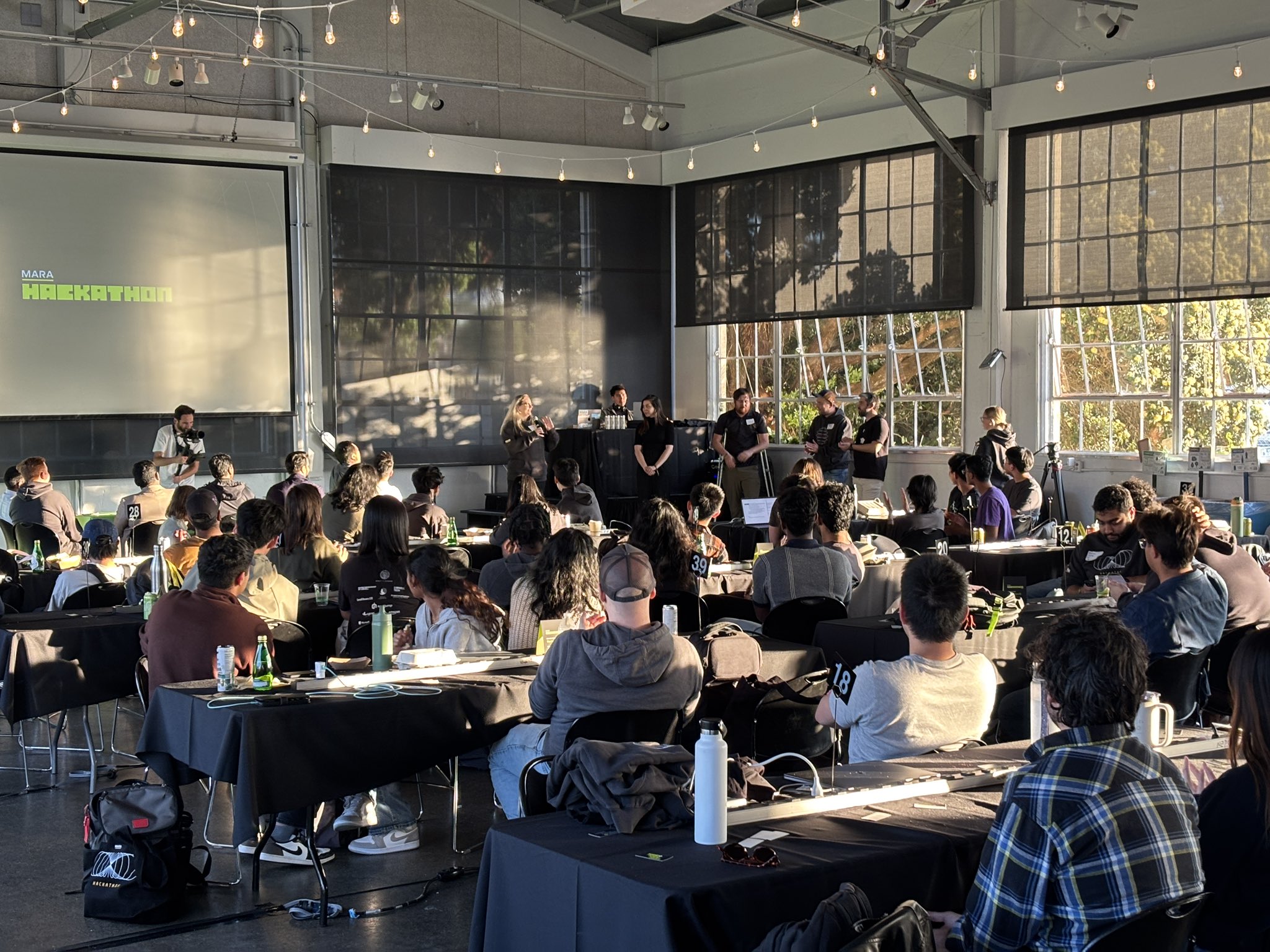
MARA Holdings is the second-largest corporate holder of Bitcoin. They challenged participants to build an AI-driven system to arbitrage energy and AI inference prices across their global data center portfolio.
My team built Panoptic, a platform that integrates satellite data with real-time energy pricing to optimize compute allocation and infrastructure investment. The system includes a global visualization of MARA's data centers, AI-powered analysis for battery storage buildouts and expansion siting, an automated energy treasury that deploys power based on grid pricing, and a derivatives platform for hedging Bitcoin and energy exposure.
The derivatives component drew directly on my background in interest rate risk—the same hedging frameworks that work for real estate debt also work for energy and crypto treasury.
Traditional A/B testing is slow and manual. I designed a system that applies evolutionary biology to user interfaces—beneficial changes propagate, harmful ones die off, and the UX evolves autonomously.
Survival of the Feature uses two AI agents working in coordination. The first generates UX variations and deploys them to a sample of users. The second applies statistical analysis to real-time user response, determining whether each variation improves engagement while calibrating how quickly to expand exposure. It's similar to natural selection, except data accelerates the process.
We won first place out of 45 teams and presented at the conference keynote.
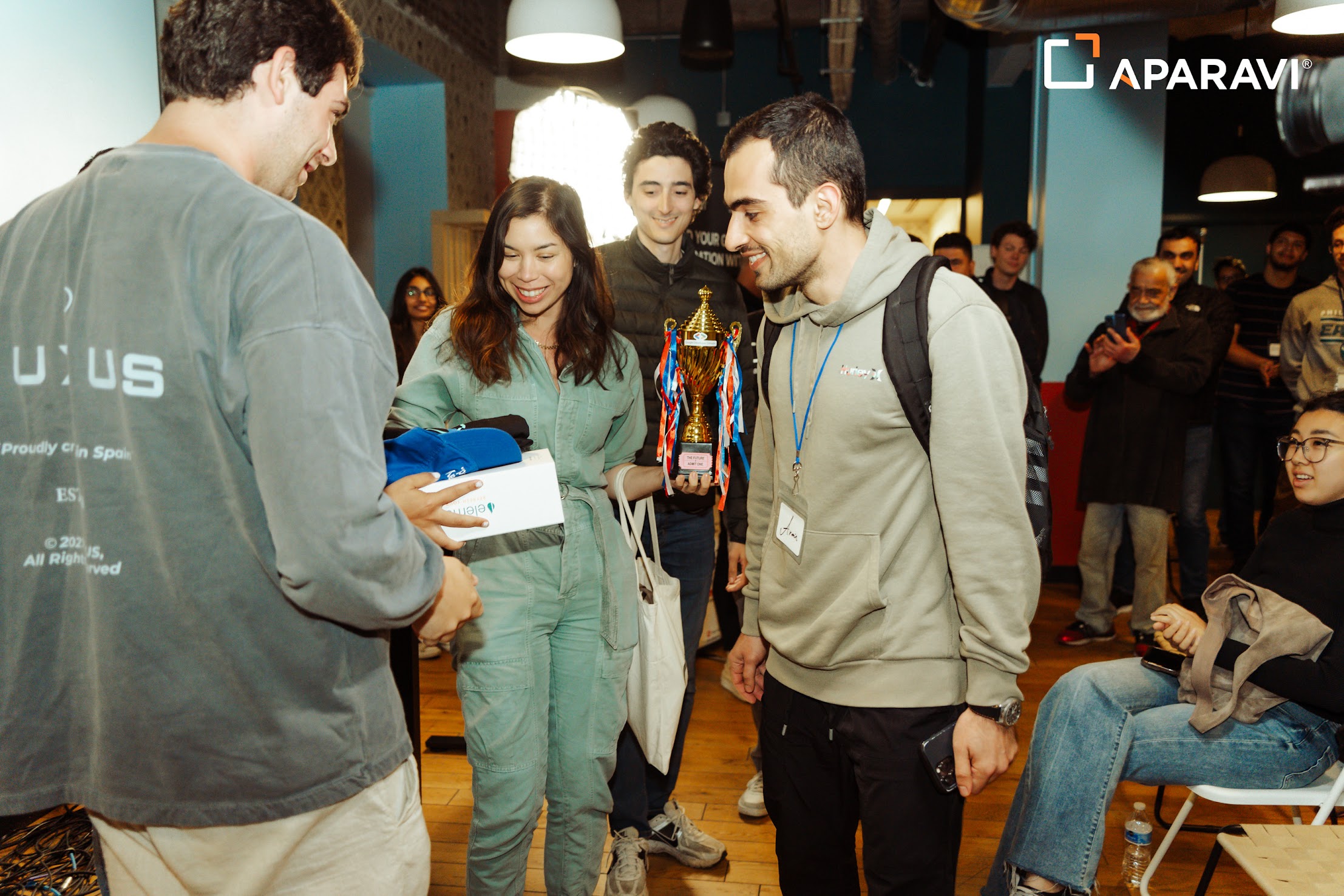
My first hackathon. Built an automated rooftop inspection system that analyzes aerial drone footage to detect property issues including cracks, missing tiles, leaks, and debris. The tool extracts frames from drone videos and processes them through Google Gemini's vision API to identify maintenance concerns at scale.
Technical approach:
Impact: Won first place at the Aparavi AI Hackathon, demonstrating practical applications of computer vision for real estate due diligence. The tool addresses a significant pain point in property assessment—manual roof inspections are time-consuming, expensive, and often miss issues visible only from above.
Stack: Python, Google Gemini API, ffmpeg, bash
Construction site monitoring typically costs $1,500 per visit — about $18,000 annually per project — and the information is delayed and incomplete by the time it reaches stakeholders. You're paying for monthly snapshots when you need a continuous feed.
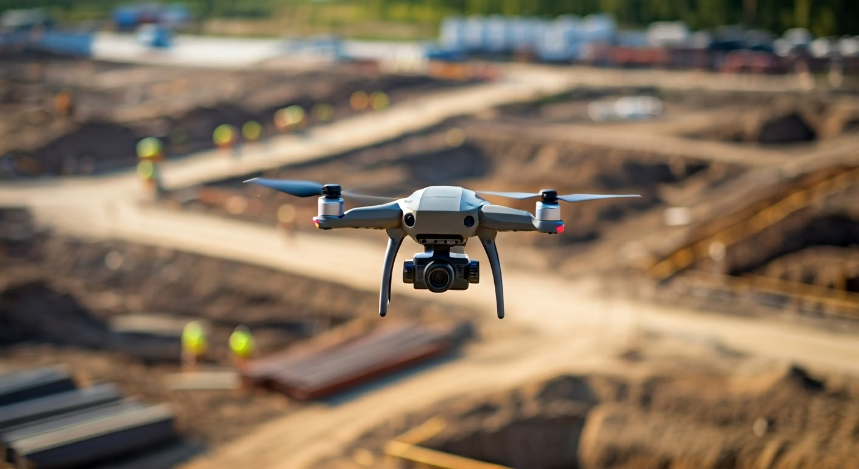
SpotCheck is a multimodal AI agent that analyzes daily drone footage to monitor construction sites in real time. The system generates 3D site models, runs automated OSHA compliance scanning between scheduled inspections, and flags delays and potential cost overruns early enough to intervene. Users can speak with the agent conversationally — querying specific areas of a site, comparing progress against timeline, or pulling up safety concerns — instead of waiting for a consultant's next visit.
The hackathon required chaining at least three sponsor tools via MCP (Model Context Protocol) into an end-to-end agentic workflow. We built SpotCheck on AWS with Minimax for video understanding, BEM for 3D reconstruction, and Operant for agent security — connecting drone capture to spatial analysis to a conversational interface a project manager could actually use.
This was the second drone-powered real estate project in two weeks, following our first-place win at the Aparavi Hackathon with Roofi. The through-line: aerial imagery and computer vision applied to inspection problems that are currently manual, expensive, and infrequent.
Member of the Young Leaders Group Steering Committee, Subcommittee Co-Chair. 2026 Emerging Leaders Product Council program member, guested on the national Public Private Partnership Council (PPPC Gold) at ULI's 2026 Spring Meeting in Nashville.
Completed the inaugural cohort of the BCL Campaign Boot Camp, a program focused on developing leaders for public service and civic engagement in San Francisco.
Democratically elected to the Governance Committee by the community and selected by the committee as chair.
Board member. Previously served as Interim Executive Director and Board Chair.
MAKE Literary Productions is an international arts nonprofit connecting writers between Chicago and Mexico City. When the founder of 17 years departed, I stepped in as Interim Executive Director to lead the transition.
The work involved major governance restructuring and organizational strategy to position the nonprofit as a fundable, sustainable venture. I worked with staff and the board to run a highly competitive search process to identify our new Executive Director, Sofia Gabriel—an arts administrator, curator, and producer with an MA in Arts Administration and Policy from the School of the Art Institute of Chicago.
I also built the organization's CRM from scratch—contact management, donation tracking, grant deadlines with year-over-year feedback analysis, pipeline management. The system ingested 17 years of QuickBooks data, matched transactions to contacts, deduplicated records, and built out the donor network automatically. The team is using it now, and I'm continuing to develop the platform for other organizations.
I studied mathematics and English literature at the University of Chicago—a combination that taught me to think in systems while staying attuned to how ideas land with people.
My career has moved between commercial real estate finance, nonprofit leadership, and building software. I've found that the analytical frameworks transfer surprisingly well: risk assessment, stakeholder management, building under constraints. Whether I'm structuring a hedge, designing a product, or running an organization, the core problem-solving approach is the same.
I'm always happy to connect—whether you're navigating rate risk questions, building something interesting, or just want to grab coffee.